Count the Putans

It’s summer in Rome – and in this city, when the temperatures rise, the clothes come off.  Which reminds me, time to play one of my favorite seasonal games: “Count the Putans.”

Some may have already guessed how the game works.  It’s not a complicated concept, but it is nonetheless quite amusing.  If you haven’t figured it out yet, by putans (the Italian-American slang for the word puttane), I’m referring to prostitutes, women of the night, hookers.  Whatever you choose to call them, they are a living, breathing part of the scenery here in the outskirts of Rome.

I happen to live and work in Roma Nord (the typically highly-regarded North end of the city), and therefore use Via Salaria every day for my commute.  La Salaria is a main vein leading out of the city.  Throughout most of the year the area is your standard, four-lane business district lined with hotels, businesses (including my office), and luxury car dealerships.  Continuing on after the commercial area, in about fifteen minutes you reach our suburb of Monterotondo.  But something bizarre starts to happen once the warm weather breaks around May: spring fever hits, the weather heats up (along with libido, apparently), and the girls start their high season.

All of a sudden, a wave of putans hit the street – and as summer progresses and the heat scorches, they get progressively more naked.  Yes, from May to September, the world’s oldest profession is alive and well on Via Salaria – so much so, the scene has inspired this impromptu game we’ve shared with friends and visiting family (and have had great fun with, I must say).

The game begins on the way home from Rome’s city center: once we reach the start of this 2-3 mile stretch of sex for sale, everyone in the car has to guess how many putans we’ll spot by the end of the road.  At the moment, we have a standing record of thirty-four (and that doesn’t count those who may have been on “business” while we were passing).  That’s pretty staggering for such a small area.  If it’s true that supply reflects demand, then the numbers are quite telling.

So you just can’t help but wonder: who are these men who keep this business thriving? Every now and then, you get to answer that question in first person: when you’re lucky enough to be behind a car that happens to be dropping a girl off, and you use all your powers of peripheral vision while trying to pass and get a good look at his face without actually turning your head.

My colleagues and I have become so accustomed to it by now that we’ve actually started to be able to recognize the putans personally, since they’re usually always the same and in the same locations.  It’s entirely possible to hear one of my colleagues say, “Anyone notice the blond with the 10-inch white boots wasn’t by the entrance?  She must be sick today.”

And Via Salaria is only one of the areas where you’re guaranteed to get a show; let’s not even get into the “tranny” zone, which happens to surface after a certain hour in one of the richest neighborhoods in the city.  Oh, che scandolo!

So, prostitution must be legal in Italy, you say?  No, it’s not.  But that’s clearly not stopping anyone.  Sure, the occasional squad car pulls up to take record, and shoot the breeze – but rather than threatened, the putans always just look blasé and mildly irritated at best by police presence.  Prostitution seems to be yet another of one of those “look the other way” laws in Italy – just another subject that stirs the usual response from most Italians when they feel powerless about something: “It’s always been that way; it’s just the way it is.”

While in the States there would probably be protests galore and a new organization formed within a week (perhaps MAS – Moms Against Sex – or something similar), here in Italy, everyone is so immune they don’t even pay attention anymore.  After all, who are they going to complain to, the politicians who frequent the escorts (aka, higher-paid, more glamorous cousins of the puntans)?

So, when our child is old enough to ask, “Mom, why is that girl standing half-naked on the side of the road?” I think I’ll go with the answer my mother-in-law used to give my husband when he was little: “She’s just waiting for the bus, honey.”

Let the blind eye philosophy continue.  After all, when in Rome…
Falling in Love, Neopolitan Style

Falling in Love, Neopolitan Style

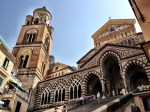
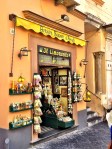
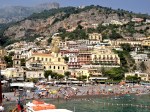
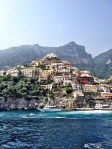
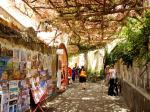
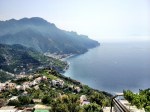
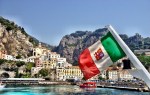
It’s hard not to fall in love with the Amalfi Coast.  I remember the first time I was there: I was fourteen years old and completely overwhelmed by the beauty around me.  Each incredible vista gave me feelings and ideas I’d never had before – and it was then I knew Italy would be a part of my permanent future, in some way. I was immediately addicted to that sensation.

These days, every time I visit another new, beautiful place in Italy I always have the urge to say it’s my favorite place of all, until I go back to the Amalfi Coast and remember that it can’t be beat – not by Lake Como, not by Taormina or the Cinque Terre, not even perhaps by Sardegna (which are all my votes for the most beautiful places overall in Italy).

Why the Amalfi Coast can’t be beat is a simple question of location, as far as I’m concerned: it happens to be right next to Naples, which automatically makes it more dramatic, passionate, and over the top. It’s the land of mandolins, romance, old-world culture, and traditional Italian slow food (before anyone even knew what “slow food” was). Naples has its problems, and perhaps the proximity to the urban grime of Italy’s “bad boy” city is precisely what gives the Costiera its literal diamond in the rough mystique.  

Aside from its obvious natural beauty, the people who inhabit the Costiera are living characters. They share the same exaggerated, gregarious personalities and dialect as their famous Neopolitan neighbors. The food is ridiculous, the atmosphere is total relaxed sophistication, and the scent of lemon trees and fresh sea air are utterly intoxicating. All of this, combined with the staggering backdrop of rocky bluffs plunging into the sea creates a drama and stunning grandeur beyond compare. All in all, it’s much more worth experiencing than talking about.

So, Amalfi Coast, I may cheat on you every now and then – but you’ll always be my first true love.

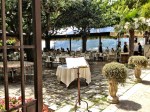
*Click on the photos to enlarge – enjoy.

Real-life Scam City

No, I’m not just trying to make a shameless plug for our new National Geographic Channel series, “Scam City,” soon premiering globally (there, that was a shameless plug).  I actually want to tell a real-life tale of what happens when my husband and father are together for too long: something my mother and I like to refer to as, “The Adventures of Tommy and Gimmi.”

Over the years, my father has developed a solid bromance with my husband, as well as a semi-unhealthy obsession with the fact that he has a certain position in Italy that makes anyone who may have something to hide immediately squirm.  This has become a somewhat dangerous situation while my parents are visiting us in Rome.  Tommy has become quite accustomed to preferred treatment such as the occasional discount, free tickets, and well, the general respect that comes with my husband’s title – so much so, that he now seems to be on a one-man vigilante mission to correct all the wrong-doings he encounters in this city.  Of course, he only attempts these antics when his cohort is close by for moral support; otherwise, he would likely risk being picchiato (beat down) Italian-style, and he knows it.

This is dangerous for my husband because he really doesn’t identify himself much with his position, since his daily work is in a specialist health clinic.  He is a high-ranking member of the Carabinieri (Italian military police), but he’s never actually worked on the street fighting crime or restoring order.  Therefore, he tends to keep a low profile and play that card only when absolutely necessary.

Tommy, on the other hand, will mention it in any and all situations, and with a very bad Italian accent, causing a certain reaction of disbelief/amazement/confusion in anyone he encounters.  Want to get to the front of the ticket line at the Forum?  ”My son is a Mariscial!” he’ll proudly state, waiting to be escorted to the front.  The person will then look at my husband, who at that point slinking back in embarrassment, is forced to own up and try to diffuse the situation with humor and charm, as only he knows how.  

But there’s never been a scene like the one they put on this weekend: Tommy had been venturing off into the city on his own during the day, when my mom didn’t feel like putting up with the oppressive heat.  On Thursday, he found himself at a bar for breakfast directly in front of the Colosseum, just past the exit of the metro.  Using the most decent Italian he could muster, he ordered a cornetto and cappuccino.  Only problem was they charged him €5.00, when it really should have only cost €1.80.  Not having been his first breakfast standing in an Italian bar, he knew the price was excessive – especially since the man in front of him had ordered the same thing and paid €1.80.

Tommy left the bar and immediately called Gimmi, who of course quickly realized the cashier had taken him for a ride.  Yes, Tommy had just become Rome’s most recent victim of tourist price gouging.  That essentially means once you open your mouth and it’s obvious you’re a tourist, you risk paying double or triple the price at some places.  That’s discrimination, and Gimmi and Tommy weren’t going to stand for it.  Besides, Tommy’s no tourist at this point; he spends six weeks a year here and has an Italian passport, for God’s sake!

So, they scheme up a plan to return to the same bar on Saturday morning, but this time, together.  Tommy walks in and nonchalantly orders the usual cornetto and cappuccino, with Gimmi a few places back in line.  This time, for some reason, the cashier has some mercy on him and charges €3.50.  Gimmi follows with the exact same order, pays €1.80, then proceeds to the counter and asks the waitress (actually, demands) to see Tommy’s receipt, which she had just collected.  

At first, she gives him attitude and refuses.  Then, given Gimmi’s clearly authoritative tone, she complies (this is before he has identified himself in any way).  She fumbles through the trash can, creating confusion and claiming to have lost the receipt.  Gimmi tells her if she can’t find it he’ll be happy to come behind the counter and find it for her.  She finally locates it, and he asks to speak to the owner immediately.  Meanwhile, Tommy’s sipping his cappuccino and enjoying the scene with a smirk, understanding only about 10% of what is actually being said.

Out from the back of the bar apparently steps the tallest Italian on record, scowling and impatiently asking what the problem is.  The problem, Gimmi explains, is that his bar is charging different prices for the same orders.  ”That’s not true,” the owner responds, “we have a discount for Italians.”  ”Oh, really?” responds my husband.  ”Quit with the stronzate (bullshit), or I’ll have this place closed down in an hour.  You’re speaking to a Maresciallo of the Carabinieri.”  Those magic words are truly the only thing that will strike fear in the heart of any swindling Italian from Milan to Palermo.  And now was a great time to pull them out of the arsenal.  

The bar turns silent, and the owner’s demeanor changes from bullying mafioso to profusely apologetic quicker than milk turns to froth.  Then Gimmi says, “You will now give my father-in-law the €1.70 you owe him for this morning’s breakfast.  And keep your eyes open, because you’re under surveillance from this moment on.” 

And just like that, Gimmi the “Conquistador” (as Tommy calls him), and his trusty sidekick, “Sancho Panza” (as I’m calling Tommy and he’ll hate me for) ride off into the sunset together, continuing their crusade to fight injustice – one steaming hot cornetto and cappuccino at a time.

Eataly: Italian Megastore

Eataly has arrived in Roma, so of course, we had to go see what all the hype was about (along with the rest of the city).  Firstly, the place is enormous – it occupies an old railway station and has been restructured impeccably, turning what was once an eyesore into a glorious rebirth of the Ostiense neighborhood.

The idea is genius: bring together all the most prestigious local products from each region of Italy – which you normally would have to travel to find – and create one amazing Italian megastore.  That incredible dessert you had in Positano?  The homemade pasta in Puglia?  You’ll find it here.  It’s a fantastic opportunity to have access to some of the world’s most cherished alimentary items. 

Each (very long) level is divided by delicacy: there’s the gelato section, the piadina section, the olive oil section, the meat section, the fish section, and much more.  In each respective area, there’s a corresponding restaurant where you can have a bite to eat.  So, while shopping for the perfect fiorentina steak, you can also sit and enjoy one.

The only negative aspect was, as with any novelty in Rome, the place was absolutely packed.  So much so, it was hard to understand what to do and where to look, let alone attempt to actually eat something.  It was 10pm, and every single restaurant was still full, with groups of people hovering around waiting.  There were signs explaining how getting a table worked, and instruction number one – “Find an open table” – made me laugh out loud.  In Italy, no reservations/number system equals pure chaos, so needless to say, we didn’t stick around to find out what happened when someone finally did get up.  It’s quite frustrating being surrounded by all that wonderful food, and not being able to eat anything.  We’ll have to go back when things calm down in a few months.

It’s truly a fantastic initiative, and is slowly expanding around the world.  In the US, aside from the New York City location opened about a year ago, stores will soon be inaugurated in Chicago and Los Angeles as well.  

On the website, Eataly also outlines its lofty aspirations to use business as a catalyst for the rebirth of a struggling nation:

Sì, ci crediamo! Siamo convinti che la belleza salverà l’Italia. E’ per questo che Eataly Roma è dedicato alla bellezza. La bellezza dell’agroalimentare, la bellezza dell’arte, la bellezza della musica e la bellezza dell’ironia.  E poi ancora… la moda, il design, l’industria manifatturiera di precisione, il turismo. 

Yes, we believe it! We’re convinced that beauty will save Italy. It’s for this reason that Eataly Rome is dedicated to beauty.  The beauty of agriculture, the beauty of art, the beauty of music and irony.  And thensome… fashion, design, the manufacturing of precision, and tourism.   

Travel highlight: Villasimius, Sardegna

A couple months ago, we took a long weekend trip to the island of Sardegna (better known as Sardinia in English). It’s the second-largest island in the Mediterranean (after Sicily) with more than eleven-hundred miles of extraordinary coastline.

The only way I can describe it is: serious beauty overload. This island is blessed with a rugged, staggering kind of natural beauty I’ve rarely seen before, if ever. The plane ride from Rome was forty minutes gate to gate – we were only in the air for about twenty minutes before approaching this massive rock of land surging out of the Tyrrhenian Sea.

The entire island boasts some of the world’s most beautiful beaches, with the kind of white sand and crystal clear, turquoise water Americans can’t locate anywhere North of the Caribbean. In fact, when I first got a glimpse of the magnificent color of the water, my first thought was: These people are crazy to bother going to the Maldives, South Pacific, etc., with this glorious place right in their back yard.

Sardegna, especially the Northern end, has a reputation as one of the most posh vacation spots for the Italian elite. In the Summer, it’s where the showbiz folk, soccer stars, and wannabes come to party on their yachts and be stalked (purposefully, of course) by the paparazzi. Since it was off-season and we knew most places would be closed, this time we opted for the more humble and relaxed Villasimius, on the Southern end, renowned for its amazing beaches and rocky, rugged landscape.

There’s something about this part of the island that gives the impression of a wild, untamed land. You know you’re still technically in Italy, but it feels like another corner of the Earth. It’s literally developed only along the coast; inland is a vast landscape of rolling hills, lush vegetation, and prickly pear trees – and not much of anything else. To get from one tiny beach town to the next, you have to be able to stomach a 30-minute ride on a windy road hanging over the bluffs, which is the only option (and actually a quite pleasant one, thanks to the abundant guardrails).

Sardegna is a destination most vacationing Americans never get to while visiting Italy. In fact, after so many years of travel I can’t believe it took me this long to get there. I suppose it was never on my must-see list of places since I’d never really heard much about it before living here. This island is still largely a best-kept Italian secret, and something tells me it’s that way for a reason (my theory is the ultra-wealthy have banded together in an effort to keep it tucked away as their private getaway, one of the rare places shielded from the dreaded foreign tourist invasion – although it was packed with Germans when we were there).

Anyway, since I have a thing for video cameras (my parents can attest to the countless tapes of embarrassing footage I took as a child), and I’m also pretty handy with editing, I’ve been trying to make a habit of taking some good video everywhere we go and creating a short recap of our trip. Makes for a great keepsake, and now, a great blog post!

Mi raccomando (keep in mind), your next trip itinerary abroad should definitely include this chic yet relatively unknown island. You won’t regret it.