Love Letter to my Nonna

Written a week before her passing…

Not many people have a best friend who’s sixty years older than they are.  I do – but devastatingly, her health has taken a turn for the worst and she’s about to leave us.

It’s certainly not to be taken for granted that she’s blessed to have lived almost ninety-three years, but to me, she’s my Noni Netta, and she will forever be ageless.  She’s the backbone of our family, and has been a constant in my life I honestly can’t imagine being without.

The thought of this happening during a rare moment when I’m not able to travel is disappointing and extremely upsetting.  I want to be there, holding her hand as she did mine whenever I was scared, or unwell.  The only solace I have is the certainty that I couldn’t have been any closer to her than I have been throughout my life.  I know she can feel me there with her.  Our relationship has been incredibly special and I believe it transcends any limitations of space and time.

At this point, Alzheimer’s has cheated her out of all the magnificent memories of an incredibly full lifetime.  She’s frail and has stopped eating.  She doesn’t remember being abnormally healthy her entire life.  She doesn’t remember the exceptional ability to cook and the amazing appetite she had until a short time ago.  She doesn’t remember never resting until every guest was stuffed and had been offered every possible form of food available in the house.

She has forgotten that I’m married, pregnant, and living in Rome.  But I’ll never forget some years ago, when my husband and I were courting each other from across the world and the distance was taking its toll on our relationship, she comforted me and offered to buy me an emergency ticket to Rome to come see him.  What was important to us was always important to her, and our happiness was her priority.

She doesn’t realize that she and her broken Italian accent taught me what true culture was all about; that there was an entire world outside of my small town to discover.  She held her native country close to her heart all these years, and in doing so contributed to an upbringing unique to that of so many around us.

She inadvertently infused in me a passion and respect for our heritage and tradition so great that it has changed the course of my own life.  By directly experiencing her country and way of life, I’ve felt closer to her than ever before.  Her culture has enriched me and continues to do so every day.  And now I have a husband with the same adorable accent, and I love hearing it.

She doesn’t know she was the quintessential definition of strength: one of the first women in a small Italian town to ever give birth via c-section; taking shelter in caves while bombs dropped down from above during WWII; having the courage to leave her war-torn home and embark on a new life in a foreign country, never to see her own parents again; feeling completely lost and out of place and stuck in what she referred to as “Siberia”; learning a new language with only the help of the newspaper and television; creating a respected reputation and a beautiful home in a community far from her own reality; then, much later, carrying on for the sake of her family after losing the love of her life.

She doesn’t remember all the wonderful years of memories we created together at 931 Myrtle Ave: all the times we laughed, sang, and danced around the living room to “Peppino the Italian Mouse” on repeat on the turn-style; the hidden jar of biscotti that was never hard to find; the incredible smells coming from the basement filled with fresh pasta, salami hanging from the ceiling, and barrels of Papa’s best dago red.  When I think of my happy place, to this day, it’s Christmas Eve at Noni and Papa’s house, or any other after-school visit, for that matter.

She’s forgotten how obsessed she was with cleanliness, following us around with a moppina attached to her hand,making any mess disappear in seconds while never getting in our way of having fun.  She would eat over the sink to catch runaway crumbs, sleep on a tiny pillow (which she made herself) so her hair wouldn’t get messed up, and would never leave the house without a layer of Oil of Olay and some makeup on.  She was an expert at taking care of herself and others.

She doesn’t recall reading every health-related book she could get her hands on, mastering symptoms and illnesses all in a second language, and with a 5th grade education.  She had a sharper mind and keener intuition than so many well-educated people I know.

She’s forgotten how she’d repeatedly make the sign of the cross every time a thunderstorm would roll in – or how she prayed incessantly for our well-being at all times, rosary after rosary, blessing after blessing.  Her faith has been an unwavering constant her entire life, despite so many obstacles and strife.

She’s no longer able to repeat all the hilarious sayings and quotes that have become scripted staples to us over the years, and will undoubtedly keep us laughing for many more to come.  All the stories we shared, plans we discussed, and great advice she always gave…  I could talk to her about anything, and she always had a wise, pertinent, and optimistic viewpoint.

She has no idea how popular she was with everyone she met.  All of our friends loved Noni Netta.  Everyone recognized her kind, gentile spirit, sweet disposition, and the light of goodness that surrounded her.  Her calming presence has meant so much to our family in the past, once struggling with serious illness and the simultaneous loss of its most beloved members.  Little does she know that – even as an adult – her smile, warm embrace, and the smell of her skin could always set my world right.

All of this, and so much more, she no longer remembers – but we can certainly never forget.  We will remember it all for her.  What she has built will last in eternity because she is the foundation of who we are, and who we want our children to become.

The only real peace I’ve found in these difficult days has been when I sit and listen to our son kicking around in my belly, and imagine how well he will know her through me.  As I prepare to raise him, she will be there in my words and my actions, as there could be no better mother to emulate.  She is my definition of honor, integrity, strength, and love.

Now, as she struggles with her last breaths, I continue to reflect on how a life, just one life, can have such an incredible effect on the development of each of us.  Any success we have is owed partially to her, for the bold choices she’s made for our well-being, and the unconditional support and abundant self-sacrificing love she’s always given us.  Her idea of a punishment was always, “I kissa you two time”; I never needed to learn how to love or be affectionate because people like her showed me what it meant from the beginning…

We’ve been blessed by her presence for so long, and we’ve needed her.  But her destiny will soon be calling – and as she would say: “se è destino non manca.”  It was her destiny to be our Nonna, and very soon, it will be our destiny to miss her terribly.

Ti voglio un bene immenso,

Andrea

 

Count the Putans

It’s summer in Rome – and in this city, when the temperatures rise, the clothes come off.  Which reminds me, time to play one of my favorite seasonal games: “Count the Putans.”

Some may have already guessed how the game works.  It’s not a complicated concept, but it is nonetheless quite amusing.  If you haven’t figured it out yet, by putans (the Italian-American slang for the word puttane), I’m referring to prostitutes, women of the night, hookers.  Whatever you choose to call them, they are a living, breathing part of the scenery here in the outskirts of Rome.

I happen to live and work in Roma Nord (the typically highly-regarded North end of the city), and therefore use Via Salaria every day for my commute.  La Salaria is a main vein leading out of the city.  Throughout most of the year the area is your standard, four-lane business district lined with hotels, businesses (including my office), and luxury car dealerships.  Continuing on after the commercial area, in about fifteen minutes you reach our suburb of Monterotondo.  But something bizarre starts to happen once the warm weather breaks around May: spring fever hits, the weather heats up (along with libido, apparently), and the girls start their high season.

All of a sudden, a wave of putans hit the street – and as summer progresses and the heat scorches, they get progressively more naked.  Yes, from May to September, the world’s oldest profession is alive and well on Via Salaria – so much so, the scene has inspired this impromptu game we’ve shared with friends and visiting family (and have had great fun with, I must say).

The game begins on the way home from Rome’s city center: once we reach the start of this 2-3 mile stretch of sex for sale, everyone in the car has to guess how many putans we’ll spot by the end of the road.  At the moment, we have a standing record of thirty-four (and that doesn’t count those who may have been on “business” while we were passing).  That’s pretty staggering for such a small area.  If it’s true that supply reflects demand, then the numbers are quite telling.

So you just can’t help but wonder: who are these men who keep this business thriving? Every now and then, you get to answer that question in first person: when you’re lucky enough to be behind a car that happens to be dropping a girl off, and you use all your powers of peripheral vision while trying to pass and get a good look at his face without actually turning your head.

My colleagues and I have become so accustomed to it by now that we’ve actually started to be able to recognize the putans personally, since they’re usually always the same and in the same locations.  It’s entirely possible to hear one of my colleagues say, “Anyone notice the blond with the 10-inch white boots wasn’t by the entrance?  She must be sick today.”

And Via Salaria is only one of the areas where you’re guaranteed to get a show; let’s not even get into the “tranny” zone, which happens to surface after a certain hour in one of the richest neighborhoods in the city.  Oh, che scandolo!

So, prostitution must be legal in Italy, you say?  No, it’s not.  But that’s clearly not stopping anyone.  Sure, the occasional squad car pulls up to take record, and shoot the breeze – but rather than threatened, the putans always just look blasé and mildly irritated at best by police presence.  Prostitution seems to be yet another of one of those “look the other way” laws in Italy – just another subject that stirs the usual response from most Italians when they feel powerless about something: “It’s always been that way; it’s just the way it is.”

While in the States there would probably be protests galore and a new organization formed within a week (perhaps MAS – Moms Against Sex – or something similar), here in Italy, everyone is so immune they don’t even pay attention anymore.  After all, who are they going to complain to, the politicians who frequent the escorts (aka, higher-paid, more glamorous cousins of the puntans)?

So, when our child is old enough to ask, “Mom, why is that girl standing half-naked on the side of the road?” I think I’ll go with the answer my mother-in-law used to give my husband when he was little: “She’s just waiting for the bus, honey.”

Let the blind eye philosophy continue.  After all, when in Rome…

Falling in Love, Neopolitan Style

Falling in Love, Neopolitan Style

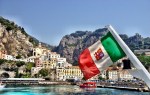
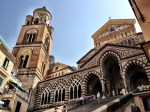
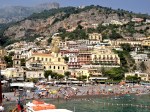
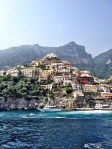
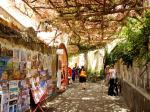
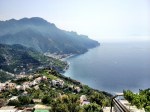
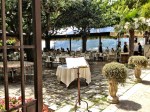
It’s hard not to fall in love with the Amalfi Coast.  I remember the first time I was there: I was fourteen years old and completely overwhelmed by the beauty around me.  Each incredible vista gave me feelings and ideas I’d never had before – and it was then I knew Italy would be a part of my permanent future, in some way. I was immediately addicted to that sensation.

These days, every time I visit another new, beautiful place in Italy I always have the urge to say it’s my favorite place of all, until I go back to the Amalfi Coast and remember that it can’t be beat – not by Lake Como, not by Taormina or the Cinque Terre, not even perhaps by Sardegna (which are all my votes for the most beautiful places overall in Italy).

Why the Amalfi Coast can’t be beat is a simple question of location, as far as I’m concerned: it happens to be right next to Naples, which automatically makes it more dramatic, passionate, and over the top. It’s the land of mandolins, romance, old-world culture, and traditional Italian slow food (before anyone even knew what “slow food” was). Naples has its problems, and perhaps the proximity to the urban grime of Italy’s “bad boy” city is precisely what gives the Costiera its literal diamond in the rough mystique.  

Aside from its obvious natural beauty, the people who inhabit the Costiera are living characters. They share the same exaggerated, gregarious personalities and dialect as their famous Neopolitan neighbors. The food is ridiculous, the atmosphere is total relaxed sophistication, and the scent of lemon trees and fresh sea air are utterly intoxicating. All of this, combined with the staggering backdrop of rocky bluffs plunging into the sea creates a drama and stunning grandeur beyond compare. All in all, it’s much more worth experiencing than talking about.

So, Amalfi Coast, I may cheat on you every now and then – but you’ll always be my first true love.

*Click on the photos to enlarge – enjoy.

Italy’s Biggest Problem

Italians are realists.  I don’t think I’ve met one who isn’t willing to recognize and/or openly criticize the current state of this country.  At the moment, many people around here have a tendency to concentrate on the negative, and for the sake of this post, so will I.  

Italy is suffering from a terrible case of low self-esteem, and not without reason.  Reeling after the twenty-year reign of a tyrannical, pseudo-Roman emperor wannabe, the state of affairs in today’s Italy can only be described as molto triste (very sad).  This country, which has so much going for it, is in total and utter shambles.  Premier Monti’s recent efforts may have been baby steps in the right direction, but I’m afraid this black hole has been dug too deep and too dark.

On a macro level, Italy is teetering on the risk of a financial breakdown not far from that of its Mediterranean neighbors in Greece.  Overall, the global economic crisis has taken its toll, and things are tight for the working class (although this was the case even before the crisis).  Cost of living in the metropolitan areas is comparable to that of New York City.  Combine that with the lowest salaries and highest gas prices in Europe, and you’ve got tombola (bingo).

After countless brutte figure (bad impressions, oftentimes aptly dubbed, “The Berlusconi Show”), this country’s name has been dragged through the mud while its population has been brutally represented by a lackluster group of ego-centric politicians, each with their own variety of complexes, corruptions, and/or sexual disorders.  Gaffe after despicable gaffe from these pagliacci (clowns) has made Italy the laughing stock of the European Union and the entire Western world, time and time again.  

Just to play devil’s advocate for a moment though: some members of the EU are quick to depict Italy as the black sheep of the group, criticizing its politics and dismissing it as an unorganized mess of a country – but then when it comes time to sip Chianti overlooking the olive groves in Tuscany, they’re all first in line.  Anyway, back to the topic at hand…

What I consider to be the most pressing, serious issue – which the same pagliacci I mentioned earlier still haven’t seemed to prioritize as urgent – is that the young, talented college graduates are fleeing the country at an alarming rate.  And with each of them goes a small piece of Italy’s bright future.  The most talented Italian youth is going, going, gone – in the hands of countries that can offer them something more, something better.  

The worst part is, that something better doesn’t refer to anything so grandiose, like a better job or more money: all they’re looking for is a job (any job at all).  With the youth unemployment rate at around 30%, at this point they’d be satisfied to just be able to build a decent (albeit, humble) future.  This is hardly a standard the world’s most beloved country should have for its youth.  Since their own homeland isn’t even capable of offering them employment and a place in society, young people are forced to abandon it.  And who could blame them? 

As for those who choose to stay and stick it out, well…  They win the chance to have their egos destroyed by interviewing for jobs as waiters and cashiers, with law/business/engineering degree in hand.  The youth of today’s Italy have been so beaten and battered down that they’ve lost all sense of enthusiasm before even getting out of the gate.  That’s because they know exactly what’s waiting for them once they finally finish their degree (after all, these are some very highly educated do-nothings).

They can already picture themselves hitting thirty, unable to find work in their field, stuck at home cooking carbonara with their parents because they can’t even afford to get their own place.  Forget about visualizing an illustrious career; they can’t even get past the hurdle of moving out on their own and entering the workforce.  

In the States, anyone who still lives with their parents at that age is generally shunned.  They’re labeled as failures – lazy, pathetic losers who couldn’t get their act together long enough to afford rent.  In Italy, however, this is the norm.  And before you start with the insults, consider the following:

1. The university system is completely different from the American system.  

And by different, I mean unstructured and non-sensical.  There seems to be no set amount of time to receive a degree.  Some finish in three years, others in eight or more.  In theory, university should last a maximum of either three or five years depending on your major, but because of the complicated course structure, it’s often longer.  And even after having had it explained to me numerous times, I still can’t really wrap my mind around it (don’t think the Italians really can either – they mostly seem disgusted whenever they’re forced to explain it).

What I have been able to understand is that rather than a standard course semester, where your overall grade is comprised of multiple tests, projects, mid-terms, and a final – as well as class participation – each course here consists of just one, overwhelming final exam that determines whether you can move forward to the next course.  You technically don’t even have to show up for class the entire semester, as long as you pass the exam on crack (which would be practically impossible, but nonetheless, some do try).  There is minimal interaction between professors and peers, and word on the street is some professors are actually instructed to hold a certain number of people back on purpose to keep the course fees coming.

2.  Salaries are not commensurate with the cost of living in most cities.  

If they’re lucky enough to find a job, university grads are barely scraping by with €1000-1500 per month (take home pay).  Yes, you read that correctly.  And sadly, that’s not just a starting salary – many can expect to earn that sum for years, perhaps decades.  It’s so pathetic I can barely even stand to write it. 

But don’t feel sorry for them just yet, or think you necessarily have it so much better – because many of them are driving the newest Audi, regularly buying pairs of €500 shoes, or perhaps just returning from a 5-star resort in some exotic location.  No joke.  All of that is easy to do when you don’t have to calculate a mortgage, rent, food, or utilities into the equation.  Without all those pesky, inconvenient… wait, what are they called?  Oh, yeah – living expenses – there’s plenty of liquidity to be spent on, well, pretty much anything you want.

After all, what’s the point of putting away that measly salary?  At that rate, you could work for forty years and still not have enough for a down payment on a half-million euro apartment in the center of Rome (and for that price it’d be about the size of a large American garage). 

3.  The mammoni (mama’s boy/girl) stereotype still rings true, but only to an extent.

It’s true that deep down many people in their late twenties and early thirties love the fact that mamma still does their laundry and irons their shirts.  She even prepares lunches for work, and who wouldn’t love that?  Mamma makes it extremely difficult to face the cold, cruel world alone, and she knows it.  

Italian mothers certainly do find joy in the fact they’re still needed by their adult children, so they don’t push for any changes.  Children know the world outside is expensive and not worth their effort, so the option of living within the comforts of the home they grew up in looks more and more appealing.  From the point of view of American culture it’s a strange phenomenon, but also an understandable one, given the economic conditions as well as the strong familial cultural tendencies.

The reality of this “failure to launch” stage is that it’s incredibly frustrating for most young people, and it’s stifling to their growth and development as adults.  In the US, we pride ourselves on being entirely self-sufficient very early on, but the Italians simply don’t have that opportunity.  And if they do, they’re either: a. very lucky; b. being bankrolled by someone; or c. have to make some immense personal sacrifices.  

The million-dollar question to the politicians is: WHY can’t they get it together?  Do they actually want this country to go to hell?  From the outside it would seem like it, although it seems ludicrous since their children live in this country, too.  Or, do they?  There’s such a great divide between rich and poor here, that sometimes the elite seem immune to this society’s problems; it’s literally as if they’re living in a completely different country, within the same borders.

Wake up, and smell the espresso, Italia…  The future of this country should not be in the hands of those who only want to exploit it and suck it dry.  If the Italians don’t take back their cherished paese soon, Italy’s best and brightest are all going to end up with British and German accents.

Eataly: Italian Megastore

Eataly has arrived in Roma, so of course, we had to go see what all the hype was about (along with the rest of the city).  Firstly, the place is enormous – it occupies an old railway station and has been restructured impeccably, turning what was once an eyesore into a glorious rebirth of the Ostiense neighborhood.

The idea is genius: bring together all the most prestigious local products from each region of Italy – which you normally would have to travel to find – and create one amazing Italian megastore.  That incredible dessert you had in Positano?  The homemade pasta in Puglia?  You’ll find it here.  It’s a fantastic opportunity to have access to some of the world’s most cherished alimentary items. 

Each (very long) level is divided by delicacy: there’s the gelato section, the piadina section, the olive oil section, the meat section, the fish section, and much more.  In each respective area, there’s a corresponding restaurant where you can have a bite to eat.  So, while shopping for the perfect fiorentina steak, you can also sit and enjoy one.

The only negative aspect was, as with any novelty in Rome, the place was absolutely packed.  So much so, it was hard to understand what to do and where to look, let alone attempt to actually eat something.  It was 10pm, and every single restaurant was still full, with groups of people hovering around waiting.  There were signs explaining how getting a table worked, and instruction number one – “Find an open table” – made me laugh out loud.  In Italy, no reservations/number system equals pure chaos, so needless to say, we didn’t stick around to find out what happened when someone finally did get up.  It’s quite frustrating being surrounded by all that wonderful food, and not being able to eat anything.  We’ll have to go back when things calm down in a few months.

It’s truly a fantastic initiative, and is slowly expanding around the world.  In the US, aside from the New York City location opened about a year ago, stores will soon be inaugurated in Chicago and Los Angeles as well.  

On the website, Eataly also outlines its lofty aspirations to use business as a catalyst for the rebirth of a struggling nation:

Sì, ci crediamo! Siamo convinti che la belleza salverà l’Italia. E’ per questo che Eataly Roma è dedicato alla bellezza. La bellezza dell’agroalimentare, la bellezza dell’arte, la bellezza della musica e la bellezza dell’ironia.  E poi ancora… la moda, il design, l’industria manifatturiera di precisione, il turismo. 

Yes, we believe it! We’re convinced that beauty will save Italy. It’s for this reason that Eataly Rome is dedicated to beauty.  The beauty of agriculture, the beauty of art, the beauty of music and irony.  And thensome… fashion, design, the manufacturing of precision, and tourism.